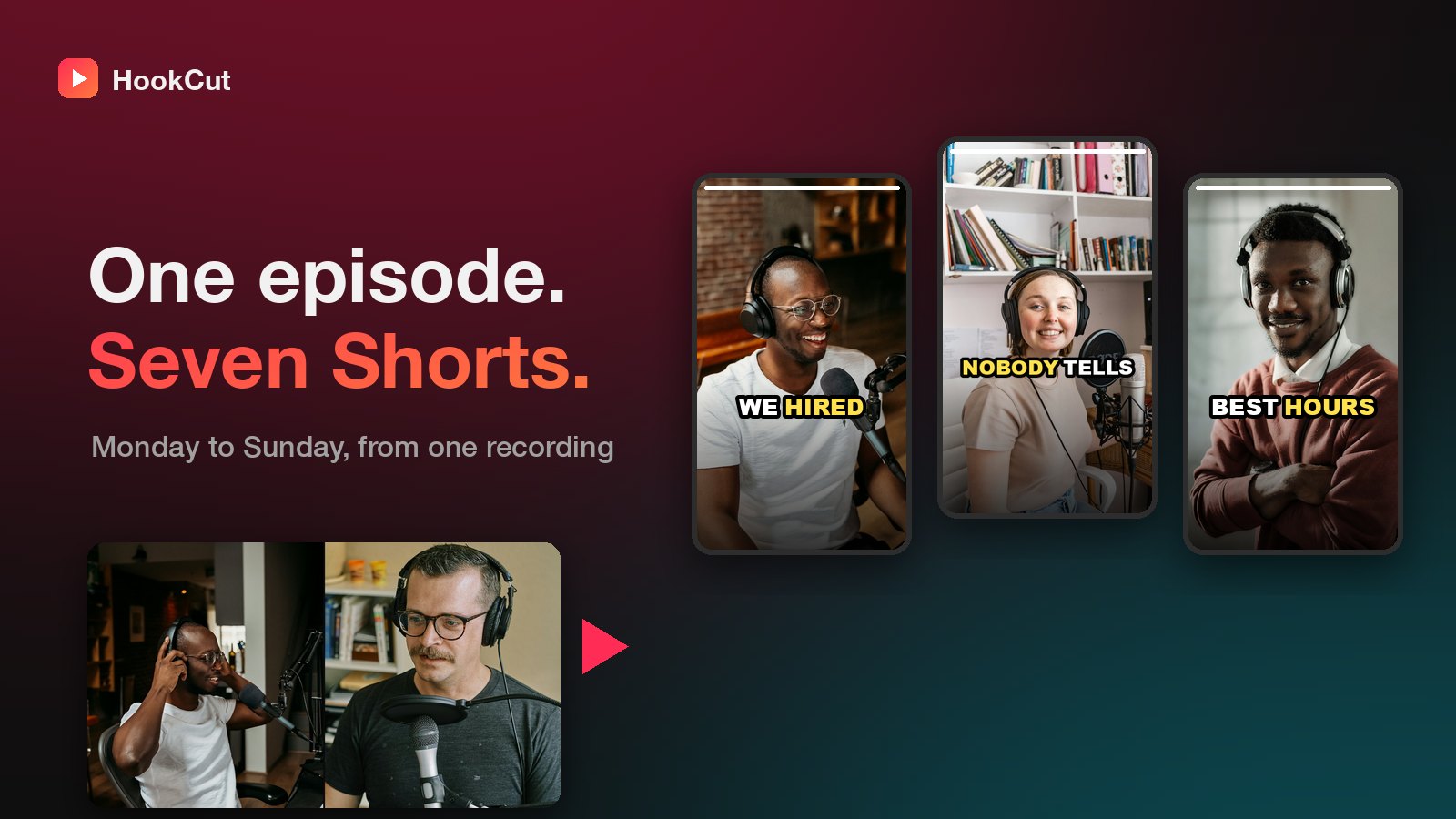
Ambitious posting plans fail for one boring reason: they need fresh content every day. When a busy week hits, the plan breaks, and it rarely restarts.
A plan that survives is one where all seven posts come from something you were making anyway.
The one-recording week
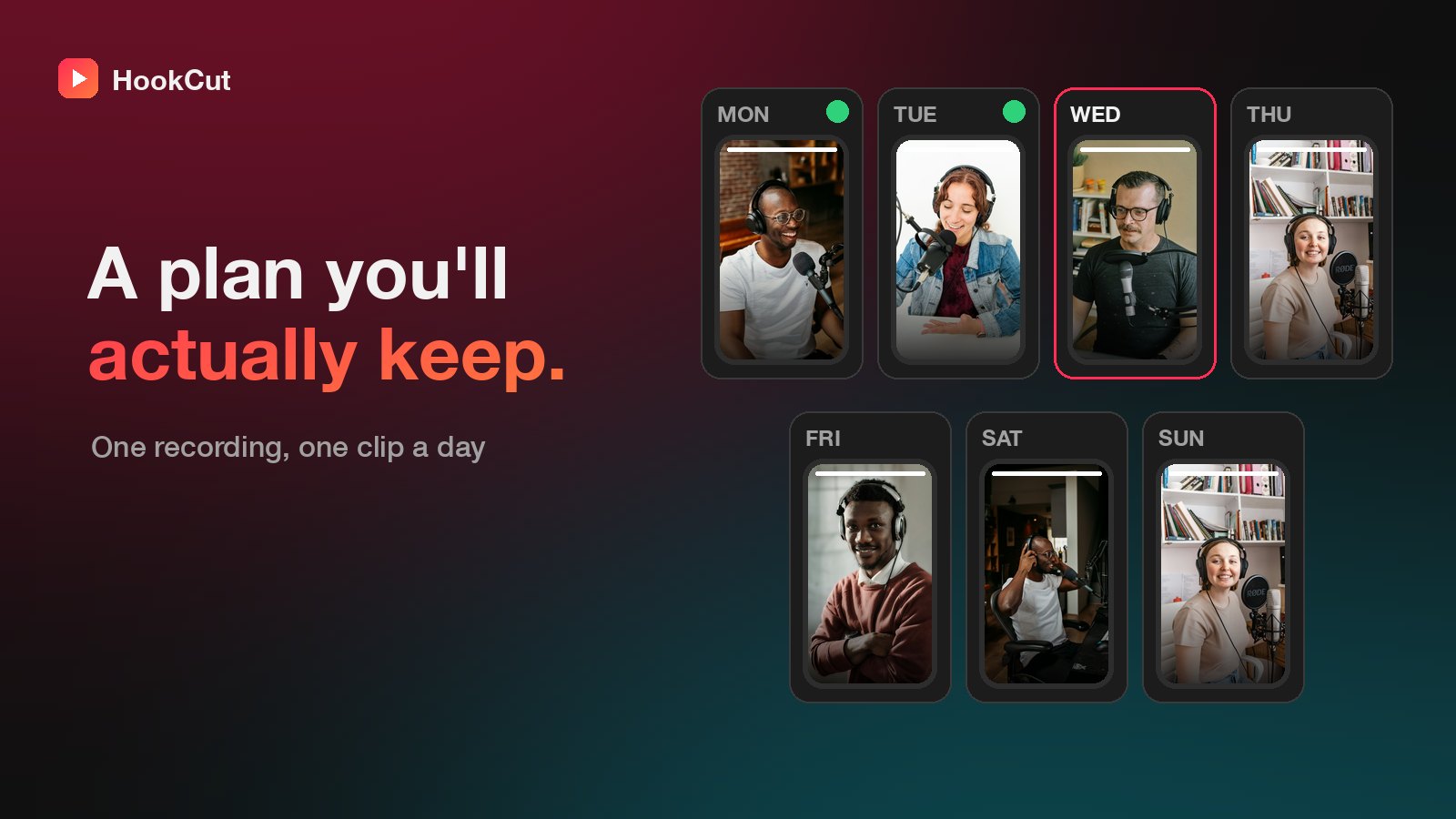
Pick your main piece of content (an episode, a stream, a talk, a long YouTube video) and cut it into clips in one sitting. Then lay them out like this:
- Monday: your strongest clip. Ideally the day the full piece goes out, so the clip can point to it.
- Tuesday: a story. Something with a beginning, a middle and an end.
- Wednesday: a strong opinion. The clip people will argue about in the comments.
- Thursday: something useful. A tip, a how-to, a quick answer.
- Friday: something light. A laugh, a reaction, a blooper.
- Saturday: a second-best clip. Weekend feeds are quieter, so give it a strong one.
- Sunday: a teaser for what's next. Point people at next week's episode or stream.
Batch, don't scramble
Do all the clipping, captioning and scheduling in one block of time, the same day each week. Most platforms let you schedule posts in advance, so the week runs itself once it's set up.
Same clip, every platform
A vertical, captioned clip works on TikTok, Instagram Reels and YouTube Shorts as-is. Post the same clip to all three. Different audiences see it, and you don't have to make anything new. Free-trial clips carry a small HookCut mark; clips on paid plans don't.
Look at the numbers once a week, not once an hour
On Sunday, note which clips held attention best. Over a few weeks you'll see which kinds of moments work for your audience, and you can ask for more of them when you pick clips.
Seven clips from one recording, set up in one sitting. That's a plan that still works in the weeks when everything else is falling apart.