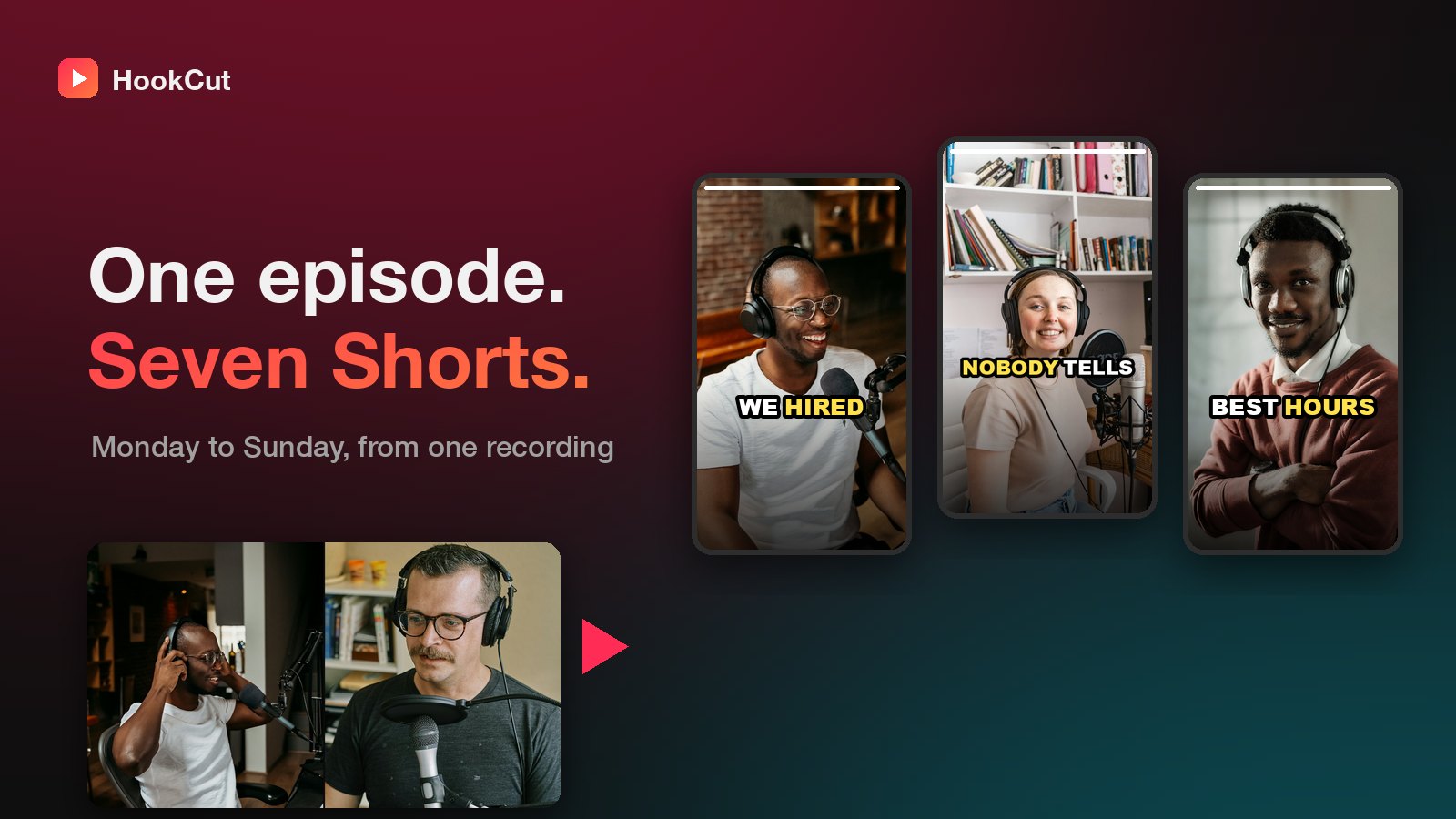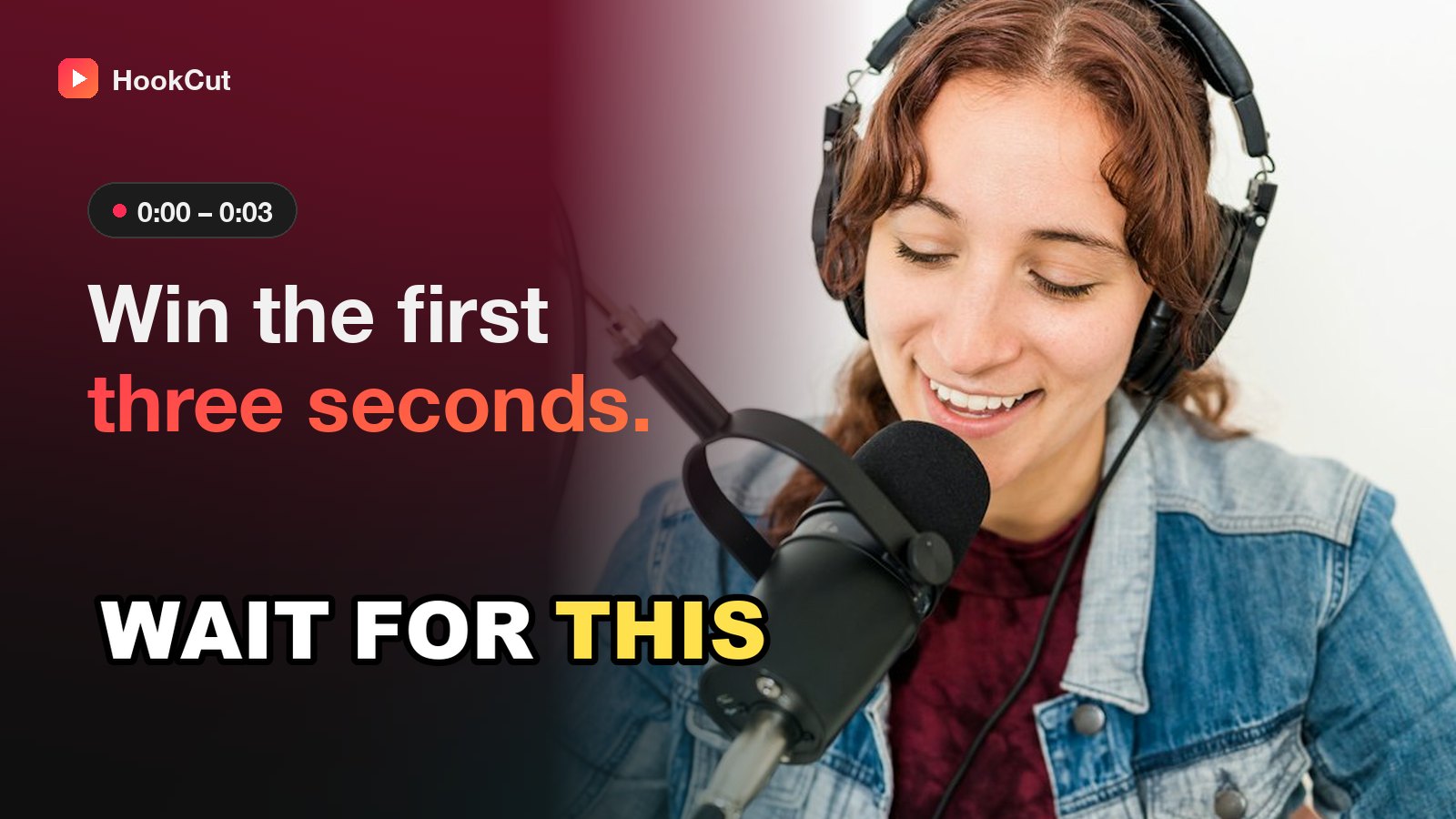
On a feed, nobody chose your video. It just appeared. The first few seconds decide whether a viewer gives it a chance or flicks past, and most clips lose people right there, because they start with the speaker clearing their throat or finishing someone else's sentence.
The good news: you don't have to script hooks. Long conversations are full of them. You just need to start the clip in the right place.
Seven hooks hiding in your recordings
- The bold claim. "Most advice about hiring is wrong." Start on the claim, not the lead-up to it.
- The confession. "I almost quit the show in year two." People stay to hear why.
- The number. "We tried it for 30 days." Specific numbers feel like a promise of a payoff.
- The question. "Why does nobody talk about this?" Viewers stay to hear the answer.
- The disagreement. Two people pushing back on each other is instantly watchable.
- The story in motion. "So I'm standing in the airport and…" Drop the viewer mid-scene.
- The reaction. A laugh, a gasp, a long pause. Start a beat before it.
Cut the run-up
The most common mistake is starting a clip at the beginning of a thought instead of at its sharpest line. If the clip opens with "so", "yeah", "I think" or "going back to", trim until the first sentence would make sense on its own.
Put the hook on screen too
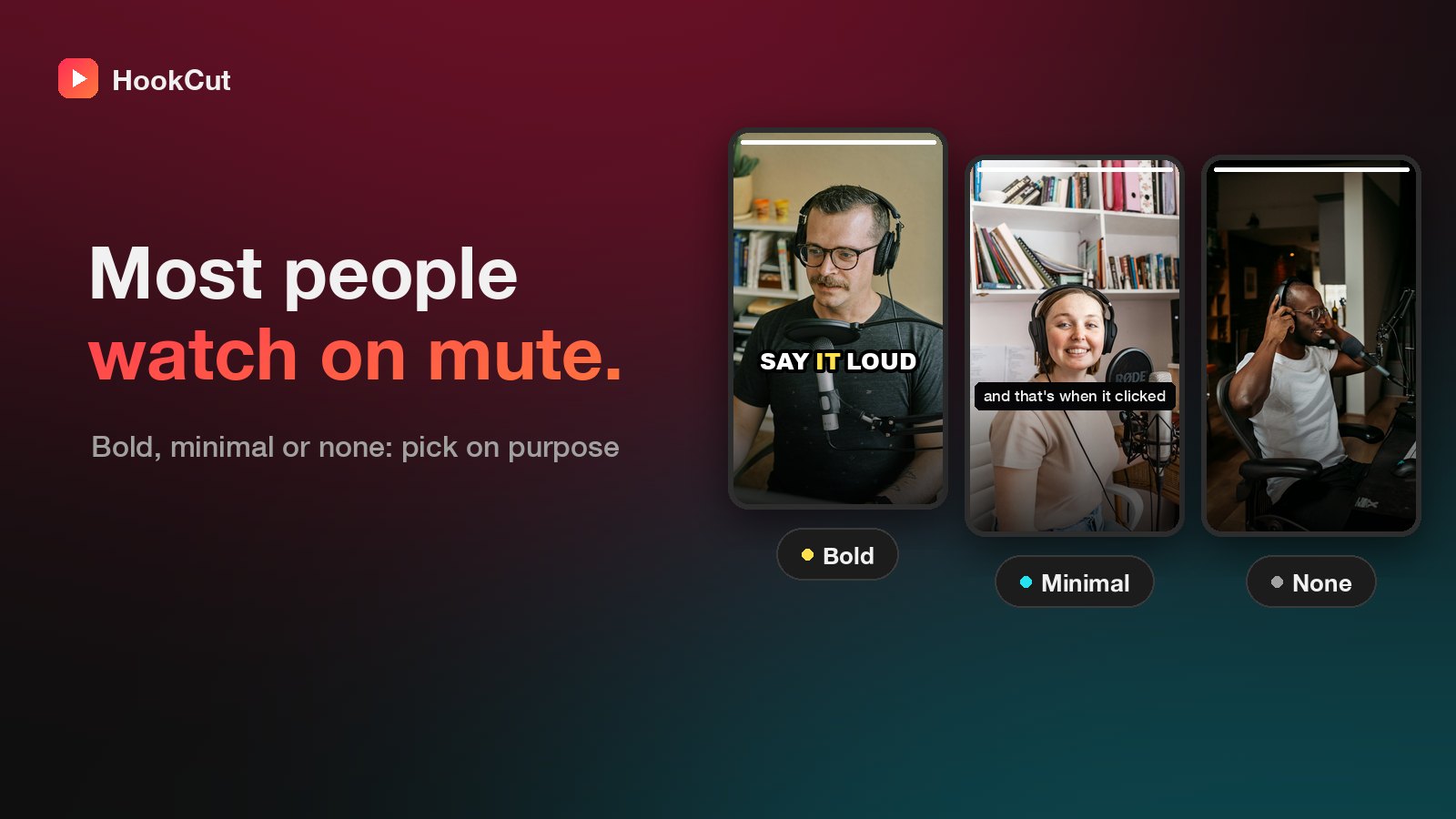
Captions do double duty here. Bold, word-by-word captions put the hook in front of people who are scrolling with the sound off, and the highlighted word pulls the eye along. Keep the most important word of the line on screen long enough to read.
Let the software do the first pass
HookCut scores every moment of the transcript for how likely it is to hold attention and starts each clip on a complete sentence, so the first pass already skips most of the throat-clearing. Then you keep the clips whose first line passes the text-message test.
Don't write better hooks. Find the ones you already said.